

Our Mission is to support the community and adapt an environmental friendly solution utilizing innovative technology to allow home and business owners benefit of clean, sustainable, and inexpensive energy.
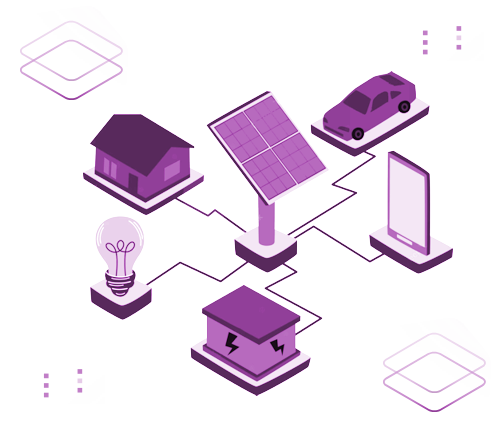


Whether you are a home or a business owner you can make a great contribution to our planet by utilizing the clean abundant solar energy. Our professional team will provide you the most cost effective engineered solution to energize your home or business with unlimited power for many many years to come. read more...

In just few more years and Electric Vehicles (EV) will be the first choice for the majority of peoples and businesses. The technology has evolved enough to convince the population and the manufacturers that; it is the future of the car industry. Our Competent team will assist you to choose your quality, robust, reliable charging station sized to meet your needs, so your vehicle is charged and ready for you to drive. read more...

To keep performance continuously at optimum level in an ever changing process environment, Automation is the most effective solution. read more...

Canada has some of the highest energy prices in the world. A well-designed solar system can save you up to 70% on your power bills and protect you from continually rising electricity prices.
You can reduce your energy bill up to 80%. Installing a 6kW solar system can save you a total of $25,000 within 20 years.
"The typical solar system pays for itself within 7-12 years, offering you the advantage of enjoying decades of cost-free energy throughout its 25-year lifespan.

Any excess power that your solar generates can be sold back to the utility company via net metering.

A typical home with Solar Power can save you around 1.3 to 1.6 tons of carbon emmisions per year.
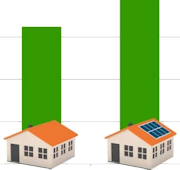
Surveys show that for every $1,000 saved in utility bills per year, approximately $20,000 is added to a home's value. Plus studies have found that homes with solar sell twice as fast as similar homes in the same neighborhood, along with homebuyers being willing to pay more for them because of the solar.

The Greener Homes Grant is a program that allows homeowners in Ontario to get up-to $5000 when they invest in energy-efficient upgrades such as renewable energy or new windows and doors.
The Solar panels capture energy from the sun and turn it into DC electricity. This DC electricity passes through an inverter, converting it to AC electricity to be utilized in homes and businesses. The DC electricity might be stored in batteries using charging controller and then passes through an inverter, converting it to AC electricity (this option is mainly for off grid PV system). By using net-metering the excessive solar electricity generated is exported to the grid and you receive a credit from your utility company. The generated solar energy you produce will first feed your home. When your PV system is not producing enough energy for your home the grid will provide the extra electricity needed to meet the your demand and you will be billed for that.
The cost of residential PV system installation varies based on the size of your home and your energy consumption (depends on your lifestyle). Aproximatlly the average cost per installed watt is about $3.00. I geneal the average home in Canada consumes about 8500 kWh per year of electrical energy. If you are installing the system yourself then a good rule of thumb is to account for $1.50 per watt. The government offers several incentive programs, you might be eligible to receive a grant and free interest loan, and that would reduce the cost of your PV system.
As long as you have a south, east, or west facing slope is available assuming no or minimum shade, that means the roof is suitable for solar panel installation. Also there are several other factors are impacting the overall solar panel's generated electricity over the day, month, and year. Please call our expert to discuss further details for your specific case.
Generally 7-12 years for residential installations. The free interest loan's monthly payment very much equals to your current monthly electrical bill, so in about 10 years you will own a free PV system to use for at least another 20 years. It is a great inverstment by all measurs.
Solar panels are manufactured to operate for 25 years at least, however some can last up to 40 years.
Yes, generating solar electricity means that you don't have to buy the same from the grid, therefore your energy cost is reduced or eleminated.
Yes, PV system owners are required to apply to their electrical utility provider for a permit to tie-in their solar systems to the grid (Grid-Tied PV System).
Typically excess electricity that are generated sold back to the grid, and your utility provider will credit your account for any exported electricity.
Yes, as long as you have an adequate space for new solar panels. This capability allows some users to start with small PV system and expand at a later date based on their energy requirement or financial situation.
No, Grid-tied solar system will not run during a blackout. The PV system will shut down during a power outage for safety reasons, to protect utility provider's workers while repairing the power system equipment. Batteries are a great way to keep some circuits at your home energized during power outage, however Batteries are costly.
When solar panels are covered by heavy snow, they will not produce electricity. However a thorough study by the Northern Alberta Institute of Technology (NAIT) have found that; only around 3% of annual production is lost due to snow.
Micro inverters are much better for residential systems in most of the times. They are less cost and they are a great solution for shading issues. Sometimes you have to use string inverter (Off Grid PV System), please call our expert to discuss further details for your specific case.
Altough with off-grid you are electricity independent, however off-grid system is costly and not recommended when utility services is available. For remote properties where utility services are not there, it is a great choice. Keep in mind to have an electricity continuasly including winter cloudy days you have to have a large PV system (more solar panels, more storage batteries, larger batteries charging controller, larger inverter), also probably you need a power generator as a backup, all depends on your life style.
Sollar Panels, batteries, string inverter, charge controller. The PV system has to be sized to supply electricity based on winter days, and that means larger system is required. Also you might need power generator as a backup. All of that will make the cost very high.
for grid-tied systems, batteries are not required. however for off-grid system batteries are a must. the number of batteries it depends on how much energy you use each day. An off grid system with batteries for one day of would cost a fortune.
Battery is not required for grid-tied PV system, but having a limited back up batteries to keep the lights, internet modem/ruter, and mobils on in the event of an emergency is a smart idea.
No. It must be installed by certified electrician.
Level 2 EV charger will provide up to 30 km of range per hour of charging, that is five times faster than Level 1 (120 V outlet) EV charger, typically level1 EV charger comes with electric vehicle.
Almost all industries can benefit from our automation services, but a few of the most common industries are food and beverage, commercial goods, energy, and pharmaceutical.
Survey  the property to determine whether your property is candidate for solar.
Having an electricity bill
the property to determine whether your property is candidate for solar.
Having an electricity bill  to determine energy usage and properly sizing the PV system.
Prepare a detailed quotation
to determine energy usage and properly sizing the PV system.
Prepare a detailed quotation  to assist home owners in their decision. if installation is approved then.
Obtaining a permit
to assist home owners in their decision. if installation is approved then.
Obtaining a permit  from your utility provider for net metering. PV installer will take care of that.
Applying for Government Grant
from your utility provider for net metering. PV installer will take care of that.
Applying for Government Grant  PV installer will assist in that.
Design, procure, and install the PV
PV installer will assist in that.
Design, procure, and install the PV  system.
Coordinate with the utility company to install the net meter
system.
Coordinate with the utility company to install the net meter  PV installer will take care of that.
Integrating the PV system into your existing electrical
PV installer will take care of that.
Integrating the PV system into your existing electrical  system.
Commissioning the system by qualified certified
system.
Commissioning the system by qualified certified  personnel.
Coordinate with the authority for inspection and certification
personnel.
Coordinate with the authority for inspection and certification  PV installer will take care of that.
Energize
PV installer will take care of that.
Energize  the system.
Make the home owner
the system.
Make the home owner  familiar with the PV system.
For business installations very much the same however the approval process it takes longer
familiar with the PV system.
For business installations very much the same however the approval process it takes longer  time.
Residential process duration
time.
Residential process duration  is 4-6 weeks, system installation 2-3 days.
Business
is 4-6 weeks, system installation 2-3 days.
Business  process duration is 6 Months, system installation 1-2 weeks.